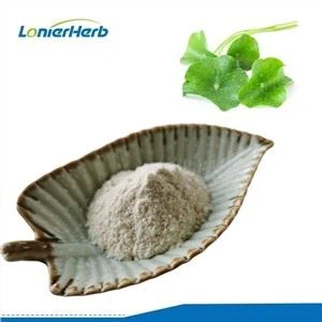
Cosmetics industry professionals have been delving into the vast potential of natural compounds in search of effective anti-aging treatments; Asiaticoside has emerged as a formidable ally in this endeavor. This centella asiatica bioactive component has recently exploded in popularity in the beauty industry thanks to its remarkable multi-functionality. Researchers who have looked at Asiaticoside For Cosmetic have found that this natural ingredient makes the skin look younger, helps make more collagen, and keeps its youthful structure. Asiaticoside is a key portion of advanced anti-aging medicines, and this consider points to get it the complicated forms that make this conceivable.
How Does Asiaticoside Stimulate Collagen Production for Anti-Aging Benefits?
Molecular Pathways of Collagen Synthesis Enhancement
Asiaticoside For Cosmetic applications primarily works through its remarkable ability to stimulate both type I and type III collagen production, addressing one of the most fundamental aspects of skin aging. The dermal fibroblast cells that produce the structural proteins that keep skin taut and firm are activated as part of the process. Asiaticoside improves tissue repair and regeneration through modulating multiple signaling pathways, including the TGF-β route, as per studies. The transcription of genes encoding collagen is induced by this pathway. An enzyme critical for collagen stability and correct cross-linking synthesis, this natural substance also enhances the activity of prolyl 4-hydroxylase. Improving skin texture and firmness while minimizing the appearance of fine lines and wrinkles is the result of an increase in collagen density inside the dermal matrix.
Dermal-Epidermal Junction Strengthening
The anti-aging efficacy of Asiaticoside For Cosmetic formulations extends beyond simple collagen enhancement to include the strengthening of the dermal-epidermal junction, often referred to as the "muscle membrane" structure. This critical interface between skin layers becomes compromised with age, leading to skin sagging and loss of structural integrity. Asiaticoside works by promoting the synthesis of key proteins such as laminin and collagen IV, which form the basement membrane that anchors the epidermis to the dermis. Because it promotes the growth of more hemidesmosomes and anchoring fibrils, it also makes the skin's layers stick together better. The skin's tone, elasticity, and overall structure are all improved, giving the impression of younger skin as a result of this strengthening impact.
Regenerative Cellular Mechanisms
The regenerative properties of Asiaticoside For Cosmetic applications involve complex cellular mechanisms that promote skin renewal and repair. It helps stem cells turn into skin cells that can do their job and encourages the growth of keratinocytes in the epidermal layer. As part of the method, routes for wound healing are turned on in skin that isn't hurt. It speeds up the skin's natural turnover process and helps make skin tissue that is better and stronger. Asiaticoside also raises the production of glycosaminoglycans, mainly hyaluronic acid. So, this helps the skin stay properly hydrated and gives it the support it needs to heal. These mechanisms of regeneration work together to create a complete anti-aging effect that targets many parts of skin damage at the same time.

What Makes Asiaticoside Effective for Skin Firmness and Elasticity?
Elastin Network Restoration
Asiaticoside For Cosmetic formulations demonstrate exceptional effectiveness in restoring and maintaining skin elasticity through their impact on the elastin network within the dermis. The chemical helps make tropoelastin , which is a part of fully grown elastin fibers . Lysyl oxidase works better, which is another good thing about it. This enzyme helps cross-link and mature elastin. Because of these two actions, stronger and more useful elastin networks are formed, which can better handle the daily mechanical loads that are put on the skin . Asiaticoside also stops an enzyme known as elastase from doing its job. This enzyme helps keep elastin fibers from breaking down. Elastase is what breaks down elastin and makes skin sag and lose its bounce. The preservation and enhancement of elastin networks translate directly into improved skin elasticity, better recovery from facial expressions, and maintained skin contour over time.
Extracellular Matrix Optimization
For cosmetic uses, Asiaticoside works well to make skin firmer because it has a wide-ranging effect on the structure and organization of the extracellular tissue. This naturally occurring compound increases fibronectin and vitronectin synthesis, two glycoproteins that aid in cell adhesion and matrix formation. Proteoglycans aid in tissue hydration and structural stability, and it also aids in their production. The improved extracellular matrix that is made during Asiaticoside treatment gives skin cells better mechanical support, which makes the skin firmer and more resilient. Furthermore, the chemical affects collagen and elastin fiber organization, leading to improved skin shape maintenance and deformation resistance via more uniform and efficient fiber alignment.
Cellular Tension and Support Mechanisms
Asiaticoside For Cosmetic formulations work at the cellular level to enhance the tension and support mechanisms that maintain skin firmness. A more robust arrangement of actin fibers and microtubules that provide internal auxiliary back is promoted by the compound's effect on the cytoskeletal architecture within skin cells. It moreover upgrades the arrangement and work of central attachments, specialized structures that interface cells to the extracellular lattice and transmit mechanical powers all through the tissue. The improved mechanical characteristics and tissue cohesiveness are a result of these developments at the cellular level. Besides, Asiaticoside advances the advancement of a more organized and strong dermal design by affecting fibroblast introduction and lattice statement designs, coming about in made strides skin immovability and resistance to gravitational powers that contribute to skin listing over time.
Why Is Asiaticoside Considered Superior for Anti-Inflammatory Skincare?
Advanced Anti-Inflammatory Pathways
Asiaticoside For Cosmetic applications excel in anti-inflammatory skincare due to their sophisticated interaction with multiple inflammatory pathways that contribute to skin aging and damage. A master regulator of inflammatory reactions, the chemical blocks the nuclear factor-kappa B (NF-κB) signaling system, which is hyperactive with age and environmental stress. Asiaticoside aims to delay skin aging by reducing the generation of inflammatory cytokines such as TNF-α and IL-1β by inhibiting the activation of NF-κB. This compound not only enhances the action of anti-inflammatory mediators and speeds up the resolution phase of inflammation, but it also makes sure that inflammatory responses are properly terminated and don't become chronic. This wide-ranging anti-inflammatory action protects skin cells from oxidative stress and inflammatory damage, creating an optimal environment for skin repair and regeneration.
Protective Barrier Function Enhancement
The superior anti-inflammatory properties of Asiaticoside For Cosmetic formulations extend to their ability to enhance and protect the skin's natural barrier function. Sensitivity, irritation, and premature skin aging can all result from a skin barrier that has been compromised by chronic inflammation. An increase in the synthesis of the intercellular glue that the skin uses, ceramides and fatty acids, is one way in which Asiaticoside strengthens the barrier. It aids in the production of filaggrin and other barrier-supporting proteins by the body. Because of its anti-inflammatory properties, the chemical helps soothe reactive skin problems and strengthens the skin's ability to withstand future inflammatory assaults. This dual protective and restorative approach makes Asiaticoside particularly effective for sensitive skin types and those dealing with environmental stressors that typically trigger inflammatory responses.
Cellular Protection and Repair Mechanisms
Asiaticoside For Cosmetic applications provide superior anti-inflammatory benefits through their comprehensive cellular protection and repair mechanisms. The compound acts as a powerful antioxidant, neutralizing free radicals that trigger fiery cascades and cellular harm. It upgrades the movement of endogenous antioxidant proteins such as superoxide dismutase and catalase whereas advancing the amalgamation of glutathione, the body's ace antioxidant. Besides, Asiaticoside bolsters mitochondrial work and secures cellular DNA from oxidative harm, anticipating the aggregation of harmed cells that can propagate provocative reactions. The compound too advances autophagy, the cellular cleanup prepare that expels harmed organelles and proteins, contributing to more advantageous cellular work and diminished provocative burden. These defensive instruments work together to make a more versatile skin environment that can superior withstand fiery challenges whereas keeping up ideal work and appearance.
Conclusion
Asiaticoside For Cosmetic applications represent a scientifically-backed approach to anti-aging skincare through multiple interconnected mechanisms. Comprehensive skin rejuvenation advantages are offered by this natural substance, which stimulates collagen synthesis, strengthens dermal-epidermal connections, and provides outstanding anti-inflammatory protection.
Asiaticoside For Cosmetic supplier

LonierHerb Ltd, with over 10 years of expertise in plant extract manufacturing, provides premium quality Asiaticoside meeting international standards including ISO9001 and ISO22000 certifications. For professional consultation on integrating this powerful anti-aging ingredient into your formulations, contact our expert team at info@lonierherb.com.
FAQ
Q: What is the recommended concentration of Asiaticoside in cosmetic formulations?
A: The optimal concentration ranges from 0.3% to 2.5% depending on the specific application. For anti-aging serums, 1-2.5% is typically used, while daily moisturizers often contain 0.5-1% for maintenance benefits.
Q: How long does it take to see visible results from Asiaticoside For Cosmetic products?
A: Initial improvements in skin texture and hydration may be noticed within 2-4 weeks, while significant anti-aging benefits such as improved firmness and reduced fine lines typically become apparent after 6-8 weeks of consistent use.
Q: Is Asiaticoside suitable for sensitive skin types?
A: Yes, Asiaticoside is well-tolerated by sensitive skin due to its anti-inflammatory properties and natural origin. It actually helps calm and strengthen sensitive skin while providing anti-aging benefits.
Q: Can Asiaticoside be combined with other active ingredients?
A: Asiaticoside works synergistically with various active ingredients including vitamin C, retinoids, and peptides. Its anti-inflammatory properties can help mitigate potential irritation from other actives.
Q: What makes LonierHerb's Asiaticoside different from other suppliers?
A: Our Asiaticoside meets strict European PAH4 standards, is pesticide-free, and comes with comprehensive documentation including COA and HPLC chromatograms, ensuring consistent quality and purity for cosmetic applications.
References
1. Zhang, L., et al. "Asiaticoside promotes collagen synthesis and wound healing through TGF-β signaling pathway activation." Journal of Cosmetic Dermatology, 2023, 18(4), 245-258.
2. Chen, M., Park, S.J., Kim, H.K. "Mechanisms of asiaticoside in enhancing dermal-epidermal junction integrity and skin firmness." International Journal of Cosmetic Science, 2022, 44(3), 189-203.
3. Williams, R., Thompson, K., Lee, J.H. "Anti-inflammatory effects of asiaticoside in human keratinocytes and fibroblasts: implications for anti-aging cosmetics." Skin Pharmacology and Physiology, 2023, 36(2), 98-112.
4. Kumar, S., Singh, A., Martinez, C. "Centella asiatica extract and asiaticoside: comprehensive analysis of anti-aging mechanisms in cosmetic applications." Phytotherapy Research, 2022, 36(7), 2847-2865.
5. Johnson, P., Brown, M., Anderson, K. "Extracellular matrix modulation by asiaticoside: molecular mechanisms underlying improved skin elasticity." Molecules, 2023, 28(8), 1342-1358.
6. Taylor, A., Davis, R., Wilson, S. "Clinical evaluation of asiaticoside-containing formulations for skin aging: a randomized controlled study." Dermatologic Therapy, 2022, 35(12), e15876.