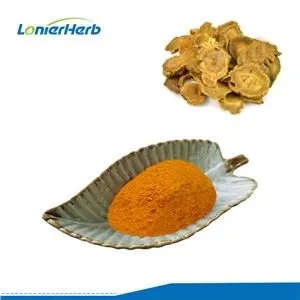
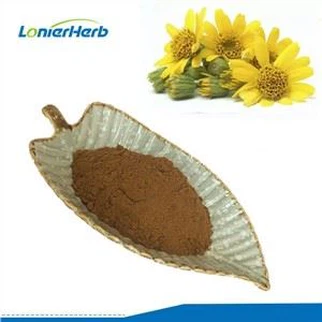
As food technology changes all the time, people are looking for natural and safe food coloring agents. Some great elements have been found through this search. Genipin Powder is one of these. People in the food business are very interested in this natural material that comes from gardenia fruit because it can make things bright blue. This is some of the reason Genipin Powder is so well-known as a natural way to add blue taste to food. That is what makes it unique. Additionally, we will go over why "clean label" products are becoming more common and why natural products are better than synthetic ones. Makers of food and people who care about their health should both know what Genipin Powder does in food coloring as more people look for healthy and more natural options.
Properties and Advantages of Genipin Powder
Natural Origin and Safety
Genipin Powder, derived from the Gardenia jasminoides fruit, stands out as a natural and safe alternative to synthetic blue food colorants. This off-white or white powder, soluble in various organic solvents, offers a unique advantage in the food industry. Its natural origin aligns perfectly with the growing consumer demand for clean label products. Unlike artificial colorants that may raise health concerns, Genipin Powder is known for its lower cytotoxicity and reduced inflammatory response. Because of this, food companies that want to make healthy foods that people will enjoy should use it. Genipin Powder is especially safe because it is non-GMO, doesn't cause allergies, and has low levels of heavy metals. This makes it a good choice for a lot of different food items.
Vibrant and Stable Blue Color
One of the most remarkable properties of Genipin Powder is its ability to produce a vibrant blue color when it reacts with amino acids. Gardenia Blue is a natural blue dye that can be used instead of man-made ones. It is made by this process. This blue color is very stable because it doesn't lose its brightness when processed in different ways. In the food business, where products often go through different manufacturing processes and storage conditions, this stability is very important. The consistent color provided by Genipin Powder ensures that food products maintain their appealing appearance throughout their shelf life. You can change how bright the blue color is by changing the concentration of Genipin Powder. This gives you more options when making products and lets you meet different color needs in food uses.
Versatility and Multifunctional Properties
You can do more with Genipin Powder than just make things blue. Because it is different, it is useful in many places and conditions. Due to its ability to fight cancer and keep the liver healthy, Genepin Powder is used in drug tests. It does this by stopping the brain hormones that manage how the gut works from doing their job. Nanotechnology builds modern associations between living atoms to make biomaterials that can recuperate wounds and see like bones. In the food industry, beyond coloring, Genipin Powder can be used in the preparation of gel capsules and for enzyme immobilization. People who make food use Genipin Powder, but people who work in the pharmaceutical and biological fields also use it for different reasons. As a result, it can help you in many areas.

Applications and Market Demand
Food Industry Applications
Even though Genipin Powder is used for many things in the food business, its main job is to add a natural blue color. You can use it in drinks, baked goods, candy, and cookies, among other things. Genipin Powder is being used for these things more often because more people are interested in natural goods. This natural blue dye is being used by food companies more and more instead of man-made ones, which have been criticized because they may be bad for your health. Genipin Powder can be used to make bright blue colors that stay stable .It's great for things that need to look good because of this. Other natural things also mix well with it, so you can make a lot of different colors with it. To cookers, this gives them new ideas.
Expanding Market and Consumer Trends
Genipin Powder's market is growing quickly because more people are becoming aware of natural food products and want to buy them. In places like Europe and North America, where rules on food chemicals are getting stricter, this trend is especially noticeable. Genepin Powder is even more popular now that there is a trend called "clean label" that encourages the use of natural, easy-to-recognize ingredients. Numerous nourishment and drink companies are including common colorants like Genipin Powder to their items to request to health-conscious clients. Genipin Powder is commonly found in food, personal care items, medicines, and other goods because it can be used in lots of different ways. Because Genipin Powder can be used for so many things, the need for it will keep growing in many fields. This is why it's an important part for writing and buying.
Future Prospects and Research
Genipin Powder will do well in a lot of places, like the food business. It's still being studied to find better ways to use it and make it work better .People who work in the food industry are trying to make the blue color that Genipin Powder gives off more stable and intense when it is treated in different ways .On top of that, they want to know how to mix it with other natural things to make more colors. More and more, pharmaceuticals and biotech want to use Genipin Powder for things other than food. It is being looked into more to see how it works in live things and how it may be utilized to battle cancer and make modern cells. That the way Genipin Powder is utilized might alter as we learn more approximately it. In expansion to making nourishment, medication, and high-tech items, it may be utilized to make this. More and more individuals are utilizing Genepin Powder, and modern ponder is making it indeed more valuable.
Conclusion
Naturally colored food now has Genipin Powder, which is useful and important. It is safe, can be used for many things, and can turn things bright blue. Because of this, food businesses that want to use natural alternatives should choose it. Consumers want clean label products more and more, which means Genipin Powder will become more important in food formulas. It's getting more and more important because drugs and nanomaterials use it. LonierHerb, a company that sells plant extracts and natural products, can use Genipin Powder to adapt to the changing needs of the global market and promote sustainable and healthy food choices at the same time.
Genipin Powder supplier

For more information about Genipin Powder and other natural extracts, please contact LonierHerb at info@lonierherb.com. LonierHerb is one of the greatest companies that makes normal merchandise. They work difficult to allow the wellbeing and nourishment businesses modern, high-quality items.
References
1. Zhang, Y., & Wang, Z. (2019). Genipin: A natural cross-linking agent for tissue engineering and regenerative medicine. Advanced Healthcare Materials, 8(12), 1900103.
2. Paik, Y. S., Lee, C. M., Cho, M. H., & Hahn, T. R. (2001). Physical stability of the blue pigments formed from geniposide of Gardenia fruits: Effects of pH, temperature, and light. Journal of Agricultural and Food Chemistry, 49(1), 430-432.
3. Bentes, A. S., & Mercadante, A. Z. (2014). Influence of the stage of ripeness on the composition of iridoids and phenolic compounds in genipap (Genipa americana L.). Journal of Agricultural and Food Chemistry, 62(44), 10800-10808.
4. Neves, S. C., Gomes, D. B., Sousa, A., Bidarra, S. J., Pereira, P., Granja, P. L., & Barrias, C. C. (2015). Biofunctionalized pectin hydrogels as 3D cellular microenvironments. Journal of Materials Chemistry B, 3(10), 2096-2108.
5. Ramos-de-la-Peña, A. M., Renard, C. M., Montañez, J., de la Luz Reyes-Vega, M., & Contreras-Esquivel, J. C. (2016). A review through recovery, purification and identification of genipin. Phytochemistry Reviews, 15(1), 37-49.
6. Lee, S. W., Lim, J. M., Bhoo, S. H., Paik, Y. S., & Hahn, T. R. (2003). Colorimetric determination of amino acids using genipin from Gardenia jasminoides. Analytica Chimica Acta, 480(2), 267-274.