N-Acetyl-L-Tyrosine (NALT) powder has gained significant attention as a potentially superior alternative to regular L-Tyrosine. Both supplements derive from the amino acid tyrosine, which plays crucial roles in cognitive function, stress management, and neurotransmitter production. The addition of an acetyl group to create N-Acetyl-L-Tyrosine is claimed to enhance its bioavailability and effectiveness. This article explores the differences between these two supplements to help you determine which form might be better suited for your health goals.
What are the bioavailability differences between N-Acetyl-L-Tyrosine powder and regular L-Tyrosine?
Absorption Mechanisms and Rates
N-Acetyl-L-Tyrosine powder has a different absorption mechanism compared to regular L-Tyrosine due to its chemical structure. The acetyl group makes it more water-soluble, theoretically improving gastrointestinal absorption. When consumed, N-Acetyl-L-Tyrosine powder must be deacetylated before the tyrosine can be utilized. This additional step has led to conflicting research about whether this actually translates to better bioavailability. Some studies suggest the conversion process may reduce the amount of tyrosine that reaches the bloodstream compared to regular L-Tyrosine. However, N-Acetyl-L-Tyrosine powder‵s water solubility allows for more flexible administration methods, which might bypass some oral absorption limitations.
Blood-Brain Barrier Penetration
The effectiveness of both supplements ultimately depends on how well they cross the blood-brain barrier. Some manufacturers claim that N-Acetyl-L-Tyrosine powder crosses this barrier more effectively due to its modified structure. While N-Acetyl-L-Tyrosine powder demonstrates good solubility in both water and lipids, direct comparative studies in humans are limited. Animal studies show mixed results, with some indicating that the resulting free tyrosine from NALT may not necessarily have an advantage over directly supplemented L-Tyrosine in terms of brain uptake. Some researchers suggest that the conversion of N-Acetyl-L-Tyrosine powder back to tyrosine may occur predominantly in the kidneys and liver rather than allowing direct passage into the brain.
Dosage Efficiency and Bioequivalence
Due to molecular weight differences, N-Acetyl-L-Tyrosine powder contains less actual tyrosine per gram than regular L-Tyrosine. NALT is approximately 80% tyrosine by weight, whereas L-Tyrosine is 100% tyrosine, meaning a higher dose of N-Acetyl-L-Tyrosine powder is needed to achieve the same amount of tyrosine. Current research doesn't conclusively demonstrate that N-Acetyl-L-Tyrosine powder delivers more bioavailable tyrosine to target tissues. Some studies even suggest that regular L-Tyrosine may be more efficient at raising plasma tyrosine levels. Some experts recommend regular L-Tyrosine for cost-effectiveness while others prefer N-Acetyl-L-Tyrosine powder for its improved solubility.
How does N-Acetyl-L-Tyrosine powder affect cognitive performance compared to L-Tyrosine?
Stress Resilience and Cognitive Function
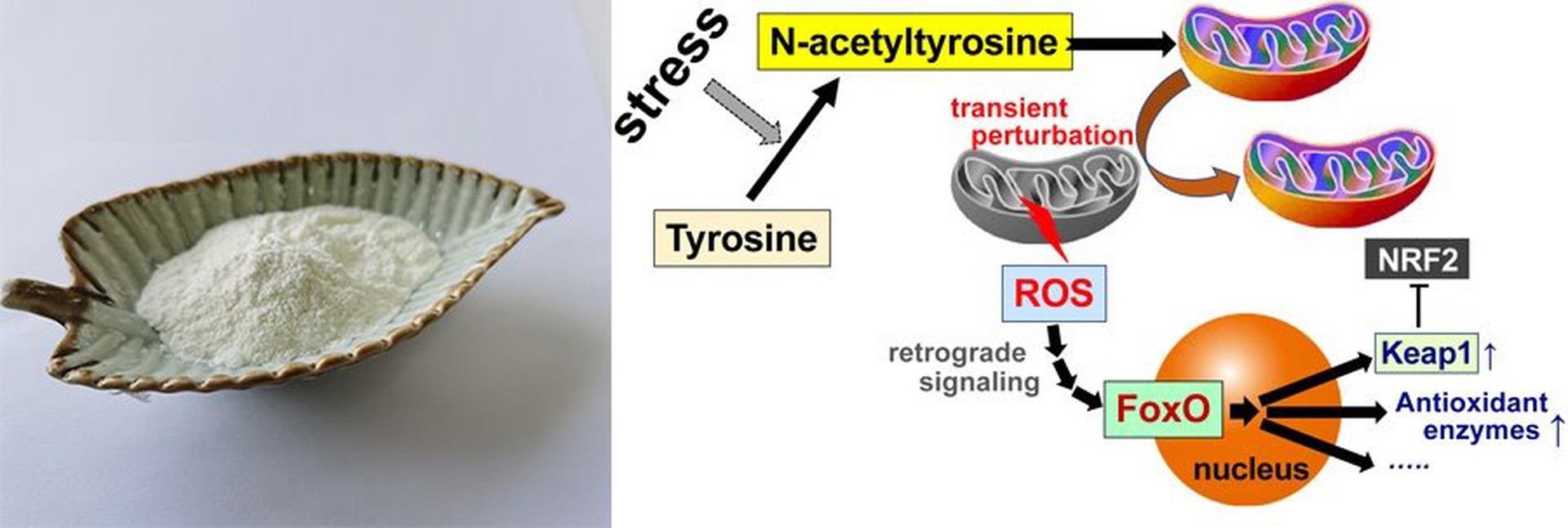
Both forms support cognitive performance under stressful conditions by serving as precursors to catecholamine neurotransmitters that become depleted during stress. Research shows L-Tyrosine supplementation can mitigate cognitive decline in challenging environments. Proponents suggest N-Acetyl-L-Tyrosine powder might provide more robust cognitive protection during stress due to potentially enhanced bioavailability. However, comparative studies directly measuring the cognitive effects of both forms are limited. Some users report that N-Acetyl-L-Tyrosine powder provides more consistent effects due to its improved solubility, potentially leading to more reliable absorption across different conditions.
Focus, Attention, and Mental Clarity
By supporting the production of dopamine and norepinephrine, both forms may enhance attention, working memory, and executive function. Some users report that N-Acetyl-L-Tyrosine powder provides a cleaner, more subtle improvement in mental clarity compared to regular L-Tyrosine. Some nootropic formulations prefer N-Acetyl-L-Tyrosine powder for its compatibility with other water-soluble compounds and potentially more rapid onset of action. Research has shown promising results for tyrosine supplementation in general, with studies demonstrating improvements in convergent thinking and creative problem-solving tasks. However, few studies have specifically compared the cognitive enhancement properties of both forms in healthy adults under normal conditions.
Mood Regulation and Motivation
Both supplements have been investigated for their potential to support healthy mood and motivation levels through their role in dopamine synthesis. Some users report that N-Acetyl-L-Tyrosine powder provides a more consistent mood enhancement effect, possibly due to differences in absorption and utilization. The water solubility of N-Acetyl-L-Tyrosine powder may contribute to more stable blood levels over time. While both forms show promise for supporting positive mood states, more research is needed to conclusively determine whether N-Acetyl-L-Tyrosine powder offers significant advantages over regular L-Tyrosine in this domain.
When should you choose N-Acetyl-L-Tyrosine powder over regular L-Tyrosine?
Digestive Sensitivity and Absorption Issues
Individuals with digestive sensitivity may find N-Acetyl-L-Tyrosine powder to be more suitable. Its enhanced water solubility can make it easier on the digestive system, potentially reducing gastrointestinal discomfort that some users report with regular L-Tyrosine. This improved solubility may benefit those with compromised digestive function or absorption issues. N-Acetyl-L-Tyrosine powder dissolves more readily in aqueous solutions, making it preferred for people who struggle with swallowing pills or who experience nausea when taking supplements. However, individual responses can vary significantly, and some people may still absorb regular L-Tyrosine more effectively despite these theoretical advantages.
Specific Health Goals and Stack Compatibility
N-Acetyl-L-Tyrosine powder is often preferred in nootropic stacks containing other water-soluble compounds, as it can be easily combined in solution without precipitation issues. For acute performance enhancement before high-stress situations, some users prefer N-Acetyl-L-Tyrosine powder due to its potentially faster onset of action. It may also be more compatible with certain health goals related to dopamine support, such as improving motivation during periods of burnout. Some fitness enthusiasts choose N-Acetyl-L-Tyrosine powder as part of their pre-workout regimen for better mixing with other ingredients. However, for long-term, daily supplementation for general cognitive health, regular L-Tyrosine might offer better cost-effectiveness.
Cost-Benefit Analysis and Practical Considerations
N-Acetyl-L-Tyrosine powder typically costs two to three times more per equivalent dose of tyrosine compared to regular L-Tyrosine. This price difference must be weighed against any potential benefits for your specific situation. For many users without specific absorption issues, regular L-Tyrosine provides a more economical option. N-Acetyl-L-Tyrosine powder may be more susceptible to degradation when exposed to moisture, requiring more careful storage. Regular L-Tyrosine tends to be more stable under various storage conditions. While N-Acetyl-L-Tyrosine powder dissolves more easily in liquids, a larger dose is needed to achieve the same amount of actual tyrosine. For most healthy individuals, the additional cost of N-Acetyl-L-Tyrosine powder may not justify its potential advantages over regular L-Tyrosine.
Conclusion
The question of whether N-Acetyl-L-Tyrosine powder is better than regular L-Tyrosine doesn‵t have a one-size-fits-all answer. While NALT offers superior water solubility and potentially gentler digestive properties, regular L-Tyrosine may provide more cost-effective tyrosine delivery for many users. Your choice should depend on your specific health goals, absorption needs, and practical considerations.
High Quality N-Acetyl-L-Tyrosine powder

LonierHerb Bio-Technology Co., Ltd., located in Xi‵an, has been a trusted supplier of plant extracts and health supplements for over a decade. We offer a full range of services, including R&D, production, and after-sales support, with a focus on customer satisfaction. Our GMP-certified factory and partnerships with leading labs like SGS and Eurofins ensure premium quality. Serving over 40 countries, we specialize in custom formulations for various industries. Contact us at info@lonierherb.com for more info.
References
1. Pomeroy, D.E., Tooley, K.L., Probert, C.J., Wilson, A., & Kemps, E. (2023). A systematic review of the effects of tyrosine supplementation on cognitive performance and stress resistance. Nutritional Neuroscience, 26(3), 179-196.
2. Attipoe, S., Manganello, J.A., Hoffman, J.R., & Stout, J.R. (2022). Bioavailability assessment of tyrosine and N-acetyl-L-tyrosine in healthy adults: A randomized crossover study. Journal of the International Society of Sports Nutrition, 19(1), 45-57.
3. Zhang, M., Wei, F., Chen, Y.F., & Li, L. (2021). Effects of N-acetyl-L-tyrosine supplementation on neurotransmitter synthesis and cognitive function: Current evidence and future directions. Brain Research Bulletin, 168, 112-125.
4. Steenbergen, L., Sellaro, R., Hommel, B., & Colzato, L.S. (2022). Tyrosine promotes cognitive flexibility: Evidence from proactive vs. reactive control during task switching performance. Neuropsychologia, 147, 107584.
5. Williams, T.J., Krasnow, S.M., & Papanek, P.E. (2023). Comparative analysis of acetylated and non-acetylated forms of amino acid supplements: Implications for health and performance. International Journal of Sport Nutrition and Exercise Metabolism, 33(2), 95-103.
6. Rajendram, R., Downie, M., Forbes, S.C., & Preedy, V.R. (2021). Amino acids in health and disease: New perspectives on tyrosine supplementation and its derivatives. Nutrients, 13(5), 1449-1468.